
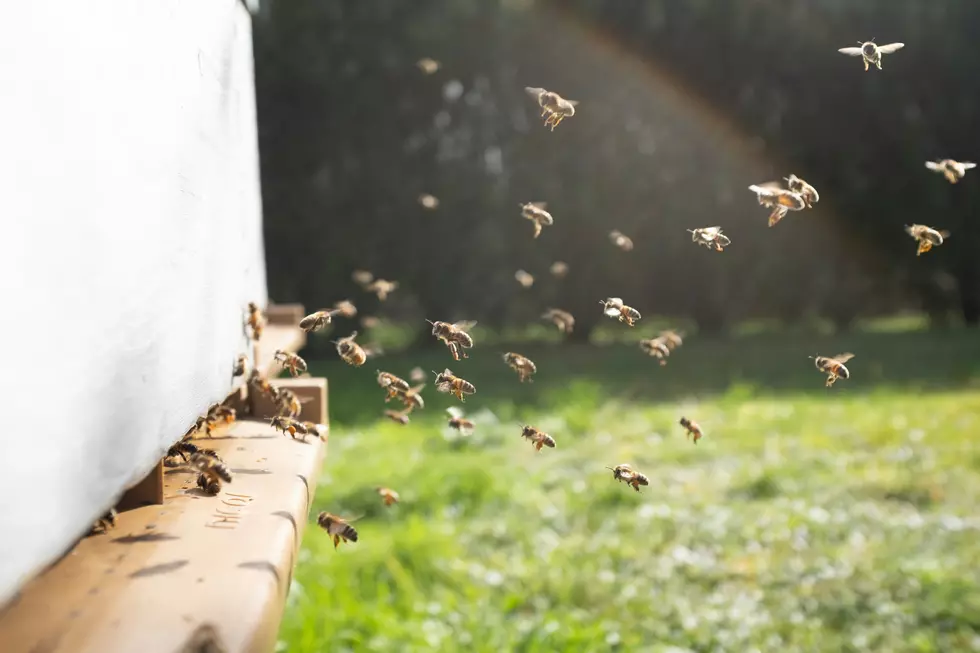
Honeybee Swarm Under Backyard Deck Stings Me & My Dog
I had a little encounter last week that I am pretty sure I will not forget anytime soon.
I was sitting on my back patio talking with my son when I suddenly realized we were surrounded by a whole lot of very angry, attacking bees.
WHAT IS HAPPENING?
At first, I honestly did not think much of it. Then these fairly small bees started making it very clear that they did not appreciate us sitting on those steps, and started stinging me! Before long, we were both heading for the house. One even stung Gloria's little tummy, so she and all the cats ran inside too! They all recognized something wasn't right in our backyard.
I was surprised because these were not the big, aggressive yellowjackets I have dealt with before. They were smaller, and after doing some searching, I believe what I encountered was a swarm of honeybees!
WHY WOULD A HONEYBEE STING ME?!
I always thought of honeybees as the friendly little pollinators that are just doing their job. And while honeybees can certainly sting, they generally are not looking for a fight. A honeybee can only sting once because its barbed stinger gets left behind, which means stinging is essentially a last resort for the bee.
So I started wondering: Maybe we simply surprised them. The backyard is a pretty quiet place, and my son and I came out, sat down, and started talking and laughing. I think we startled them.
BEE SWARM UNDER MY DECK
When I went back outside a little later, I discovered the bees were swarming in a very strange spot underneath my deck. There was no obvious hive that I could see, just a large group of bees clustered and flying around the area.
I decided the best thing to do was leave them alone.
A couple of days later, I went back to check on them, and they were gone.
WHAT I RECENTLY LEARNED ABOUT HONEYBEE SWARMS
That is actually one of the fascinating things about honeybee swarms. A swarm happens when a honeybee colony splits with the old queen, and a large number of worker bees leave the original hive to find a new home. The bees may gather temporarily in a tree, on a building, or, apparently, underneath someone's deck while scout bees search for a permanent place to live.
Once the scouts find a suitable location, the swarm can move on.
That explains why my little bee invasion disappeared.
IMPORTANT- DON'T IMMEDIATELY EXTERMINATE!
It also made me realize that if I ever see something like this again, I should not automatically assume the bees need to be exterminated. Some beekeepers will actually come and collect honeybee swarms and give them a new home.
One service I found is called 'Swarmed', which connects people who find honeybee swarms with local beekeepers.
The 'Swarmed' service is free, and the beekeepers can safely collect the bees and relocate them to a managed hive where they have a much better chance of surviving. Swarmed says fewer than one in four colonies survives without a beekeeper.
WHAT TO DO IF YOU FIND A SWARM OF HONEYBEES
If you find a swarm that appears to be honeybees, you can report it to Swarmed. The service alerts beekeepers in the area who may be able to come collect the colony. You should keep your distance and keep children and pets away from the swarm while waiting for help.
And that is probably the biggest lesson I took away from my unexpected patio encounter.
Those bees were not trying to ruin my afternoon. They were looking for a home.
I just happened to be sitting where they were trying to figure out what came next.
MY STING SITE STILL ITCHES
I am still a little shocked that I got stung by a honeybee, but after thinking about it, I cannot really blame the bee. I walked right into its temporary neighborhood, and neither of us knew what the other was doing. I was stung on the forehead and on the toe. Both locations are still itchy and swollen a week after it happened. Apparently this is just a normal reaction to a honeybee sting, and nothing for ME to worry about, but it is a little irritating.
GIVING THEM SOME SPACE
Next time I see a swarm, I will know to give them some space, take a picture from a safe distance, and call someone who knows what they are doing.
Maybe instead of a surprise attack, I will think of it as a little reminder that sometimes the best thing we can do for wildlife is simply give it room to move along.
LOOK: 20 of the biggest insects in the world
Gallery Credit: Andrea Vale
These 50 US Cities are Crawling with Bed Bugs
Gallery Credit: Scott Clow
Quiz: Do you know your state insect?
Gallery Credit: Andrew Vale